
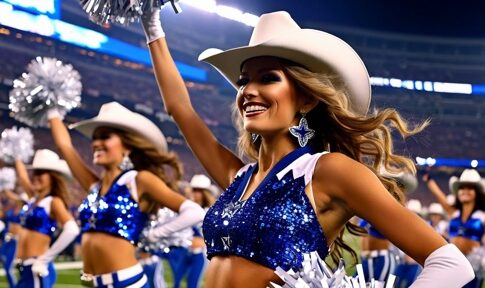
The most glamorous cheerleading brand in America just turned a heartbreaking loss into a blunt wake-up call about how fragile life is, even for the fittest among us.
How a sideline architect became a Netflix-era star
The Dallas Cowboys Cheerleaders brand has spent decades crafting a precision performance machine where choreography is as tightly engineered as any playbook on the field. The choreographer at the center of this story operated inside that machinery as both technical authority and emotional ballast, shaping how hundreds of women moved in sync while also coaching them through the scrutiny of cameras and crowds. Netflix exposure turned her from an internal force into a recognizable figure, giving viewers a front-row seat to her standards, corrections, and quiet encouragements.
Reality-style access did more than raise her profile; it changed how fans understood the labor behind every eight-count on game day. Viewers no longer saw anonymous lines of identical smiles but a system in which one choreographer’s eye determined who stayed, who improved, and which routines became iconic. That visibility also carried a conservative-friendly message about merit, discipline, and accountability: places on that field were earned through repeated effort, and she helped enforce that contract in plain view of millions.
The tribute that turned grief into a public moment
The Cowboys cheerleaders’ tribute after her death did more than check the box of organizational sympathy; it drew a straight line between her unseen labor and the spectacle people came to watch. When a group that markets polished perfection pauses to acknowledge a fallen architect, it signals to fans that excellence is not an accident but the product of specific people whose names usually stay backstage. Conservative viewers who value loyalty and institutional memory recognize this as the organization saying, “We honor our own, even when the cameras move on.”
The public nature of that moment also matters because of her age and cause of death. Colon cancer at 45 shatters the comfortable illusion that serious disease shows up only after retirement parties and grandkids. When that reality hits a world built on youth, flexibility, and physical peak, it challenges the audience to question assumptions about who “looks” sick and when screening should begin. The tribute implicitly invited fans to see colon cancer not as a distant risk for “old people,” but as a present threat even for someone who spent her life in motion.
Colon cancer, early risk, and what the facts suggest
Colon cancer cases have been rising among adults under 50, while public messaging and insurance rules often lag behind that trend. Medical groups now recommend routine screening beginning in the mid-forties for average-risk adults, yet many people still treat that as an optional chore to delay, not a nonnegotiable health duty. Stories like this one cut through that hesitation more effectively than statistics, because viewers watched a healthy, working professional vanish from a familiar world in a span that feels brutally short.
From a common-sense conservative perspective, the takeaway is not panic but stewardship. Bodies are assets that allow people to work, support families, and contribute to communities; protecting that asset includes uncomfortable checks before something goes wrong. When a public figure tied to a patriotic, family-friendly franchise dies young of a largely detectable cancer, the lesson leans toward personal responsibility paired with better awareness, not fatalism or bureaucratic scolding.
Legacy, values, and what endures on and off camera
The choreographer’s legacy inside the Dallas Cowboys Cheerleaders system will live in muscle memory as much as in archived footage. Routines she crafted will be taught to rookies who never met her, counts will be called the way she insisted, and standards she set will survive as unwritten law long after social feeds move on. That continuity reflects a deep conservative instinct: institutions outlast individuals by preserving the best of what those individuals built.
Her presence in a Netflix docuseries also ensures that future viewers will encounter her not as a footnote but as a fully realized personality. Episodes will show a woman balancing toughness with care, guarding the integrity of the uniform while pushing dancers to own their choices and their effort. For older viewers skeptical of reality television, her story demonstrates the upside of this genre when handled well: it can make invisible work visible, remind audiences that excellence has a human cost, and, in tragic cases like this, push people to act sooner on their own health instead of assuming tomorrow is guaranteed.
Sources:
America’s Sweethearts: Dallas Cowboys Cheerleaders (TV Series) – IMDb
America’s Sweethearts: Dallas Cowboys Cheerleaders – Rotten Tomatoes
America’s Sweethearts: Dallas Cowboys Cheerleaders – Wikipedia