
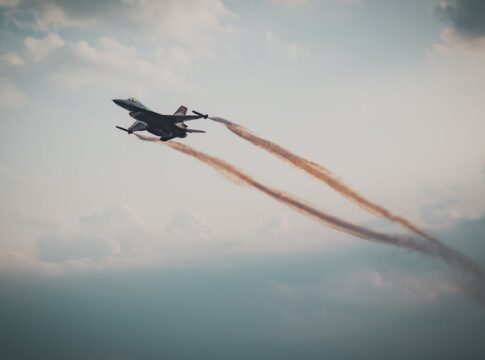
The United States military executed the most daring combat rescue operation in American history, deploying 155 aircraft and hundreds of personnel to extract two downed F-15E Strike Eagle crew members from deep inside Iranian territory. The mission, spanning nearly 48 hours beginning April 2, brought everyone home alive from a location 200 miles within hostile airspace.
The Mission That Defined Air Dominance
When an F-15E Strike Eagle known as call sign Dude 44 took a hit at 4:40 a.m. local time, both aviators survived but landed in separate locations inside Iran. Rescue forces immediately launched to recover the pilot first, spending seven hours inside Iranian airspace under constant fire. Purpose-built HH-60W Jolly Green II helicopters, equipped with advanced radar and self-defense systems, fought through intense ground fire while A-10 Warthogs maintained radio contact with the downed pilot and engaged any threats approaching his position.
The lead A-10, carrying the special Sandy call sign reserved for search and rescue operations, absorbed so much enemy fire that the pilot eventually had to exit Iranian airspace and eject. Meanwhile, 155 aircraft established seven separate deception zones to confuse Iranian Revolutionary Guard forces. B-1 bombers, F-22s, F-35s, F-16s, and additional F-15s created the appearance of multiple rescue operations while 48 tanker aircraft kept the entire fleet airborne.
Evolution Since Desert One Failure
President Donald Trump recognized the operation at the Pentagon, noting how it captured worldwide attention. Chairman of the Joint Chiefs General Dan Caine described the engagement as an incredibly dangerous close-in gunfight. The mission stands in stark contrast to the failed 1980 Operation Eagle Claw, when eight servicemembers died attempting to rescue American hostages from Tehran. The current operation demonstrated how far American military rescue capabilities have advanced in four decades.
Historic Context and Strategic Implications
The F-15E Strike Eagle serves as the primary workhorse of Operation Epic Fury, now in its fifth week targeting remaining Iranian military capabilities. These aircraft carry the largest bomb payload of any American fighter, with crews often accumulating hundreds of combat hours over Syria, Iraq, Afghanistan, and Iran. Air Force rescuers have maintained a tradition of recovering downed pilots under fire since the Korean War, saving 2,780 American service members in combat situations during the Vietnam War alone. This latest rescue mission exceeded all previous operations in scale, complexity, and the level of coordination required to succeed against a sophisticated adversary on their home territory.
Sources
Fox News: REBECCA GRANT: ‘Dude 44’ operation inside Iran is most audacious US military rescue ever