
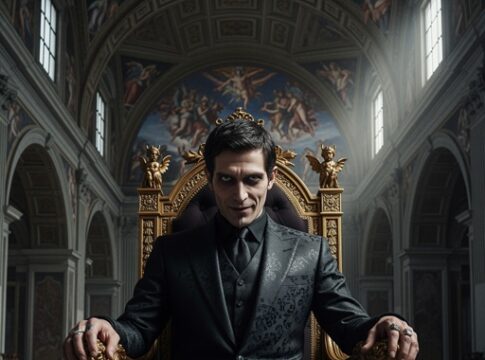
When a Silicon Valley billionaire lectures the Vatican about the Antichrist, you know the intersection of technology and theology has reached a breaking point.
Silicon Valley’s Theological Gambit
Peter Thiel arrived in Rome not as a penitent but as a prophet. The billionaire venture capitalist spent four days lecturing on his interpretation of Christian eschatology, positioning technological governance as the central battleground between human flourishing and civilizational collapse. His exclusive lectures, held in private settings with selective audiences, represent the latest evolution of concerns he has publicly discussed since a New York Times podcast interview last year. The Rome venue carried symbolic weight no accident could explain—the headquarters of Catholic authority itself, chosen deliberately for theological engagement or confrontation.
The Vatican’s Preemptive Strike
Before Thiel’s first lecture began on Sunday, March 16, institutional resistance had already crystallized. Paolo Benanti, a priest advising two papacies on technology ethics, published an essay Saturday characterizing Thiel as a political theologian operating at the heart of Silicon Valley’s ecosystem. Benanti argued that Thiel’s theories represented a radicalization of Western values including individuality, technological progress, and competition. The Italian bishops’ newspaper Avvenire had already published its own critical article the prior week, arguing that Thiel’s vision fundamentally rejects human redemption and democratic governance in favor of an elite superplutocracy that would monitor and protect humanity from technological threats.
The institutional pushback was coordinated and swift. Vatican officials and Italian government authorities aligned against the event, transforming what might have remained an exclusive intellectual gathering into an international religious and political flashpoint. This was not theological debate conducted in academic journals or seminary halls. This was institutional power mobilizing against a private citizen’s ideas.
Antichrist as Administrator
Thiel’s theological framework, refined through exclusive lecture series in San Francisco and Paris over the past year, positions the Antichrist not as a demonic figure but as something far more insidious: a comforting administrator promising safety, control, and protection from technological risk. In Thiel’s interpretation, the Antichrist emerges as the ultimate technocrat—the figure who solves humanity’s anxieties about artificial intelligence and transhumanism through benevolent governance and centralized authority. This inversion of traditional Christian eschatology reflects Silicon Valley’s genuine anxieties about meaning decay and technological disruption.
Thiel’s supporters frame his warnings as a defense of Western spiritual identity amid mounting technological disruption. They position his theology as protective rather than radical, emphasizing civilizational preservation. Yet critics identified something more troubling: a framework that implicitly rejects democratic governance and human dignity in favor of technocratic control by elite architects of humanity’s future. The Italian bishops’ newspaper argued that Thiel’s Antichrist description applies to anyone who places limits on unlimited progress—a theological position that effectively delegitimizes democratic constraints on technological development.
Power Dynamics and Political Alignment
Thiel’s wealth and influence within Silicon Valley positioned him as a formidable voice, yet his Rome event faced institutional resistance from both religious and governmental authorities. The Cluny Institute, housed within the Catholic University of America, organized the lectures alongside the Vincenzo Gioberti Cultural Association, an organization with ties to Italy’s far-right political movements. This partnership amplified concerns that Thiel’s theological framework was becoming entangled with nationalist and anti-democratic political movements. The Gioberti Association praised Thiel’s courage and intellectual liberty while warning of hidden forces bent on destroying what remains of the West.
Joe Lonsdale, Thiel’s fellow Palantir co-founder, greeted the arguments with muted praise—qualified support that reflected uncertainty within tech circles about the political implications of Thiel’s theology. The event had become as much a political flashpoint as a philosophical one in Italy’s polarized climate, creating tension between private sector influence and public institutional authority that neither side could ignore.
What Remains Unseen
The lecture contents themselves remained private, limiting independent verification of Thiel’s specific theological claims discussed in Rome. No direct Vatican statement was issued; opposition came through intermediaries like Benanti. Attendance numbers and participant responses went unreported, leaving the actual impact of the four-day series uncertain. What emerged clearly was that Thiel’s framework—refined in exclusive settings away from public scrutiny—had forced institutional actors to articulate their opposition to a particular vision of technological governance wrapped in Christian language.
The Rome lectures represent a significant moment in how Silicon Valley ideology increasingly intersects with religious and political frameworks globally. Whether Thiel’s theological vision influences how tech elites understand governance in coming years, or whether institutional resistance contains it to exclusive circles, remains to be determined. What cannot be disputed is that the Antichrist, in Thiel’s telling, has become a surprisingly comfortable administrator—and that prospect has genuinely alarmed Rome.
Sources:
Peter Thiel’s Antichrist warnings during Rome lecture draw criticisms from the Vatican
Peter Thiel’s Anti-Christ Rome Talks Stir Vatican
Tech Billionaire’s Antichrist Lectures Spark Controversy in Rome Near the Vatican