
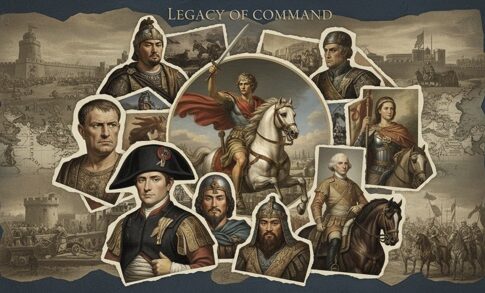
Julius Caesar discovered a brutal truth about human nature that every military leader since has learned the hard way: courage and endurance are two entirely different beasts.
The Moment That Revealed Human Nature
The year was 52 BC, and Caesar faced his greatest challenge yet. Vercingetorix, the charismatic Gallic chieftain, had united nearly every tribe in what we now call France against Roman expansion. At Alesia, 80,000 Roman legionnaires found themselves surrounded by over 250,000 Gallic warriors. When the dust settled and Vercingetorix finally surrendered, Caesar recorded the defeated leader’s philosophical reflection on why his rebellion had ultimately failed.
Caesar embedded this wisdom in his Commentarii de Bello Gallico, his third-person account of the Gallic Wars that served as both historical record and political propaganda. The quote appeared in Book VII, Chapter 77, capturing a moment of brutal honesty about the difference between flash-in-the-pan heroism and grinding determination.
Why Endurance Trumps Heroism
Caesar understood something fundamental about warfare that Hollywood consistently gets wrong. Battles are won not by soldiers seeking glorious death, but by those willing to march through mud, endure hunger, maintain discipline during endless sieges, and keep fighting when the initial adrenaline fades. The Gallic rebellion failed because sustained resistance requires a different kind of courage than charging into battle.
This insight proved prophetic for Caesar himself. His decade-long Gallic campaigns demanded exactly this type of patient endurance from his legions. They faced harsh winters, supply shortages, and constant guerrilla warfare. The soldiers who survived and conquered Gaul were not death-seekers but professional warriors capable of methodical, persistent effort.
The Modern Military’s Ancient Lesson
Contemporary military analysts recognize Caesar’s observation as timeless wisdom about human psychology under stress. Special forces training programs worldwide focus heavily on building mental resilience and pain tolerance rather than just aggressive instincts. Navy SEALs famously emphasize that their most valuable trait is not fearlessness but the ability to perform effectively while afraid and uncomfortable.
The quote has gained renewed attention in 2026 through military education platforms and leadership training materials. Modern commanders face the same challenge Caesar identified: finding personnel who can maintain effectiveness through prolonged deployments, bureaucratic frustrations, and the grinding routine of military life rather than just moments of dramatic action.
Caesar’s Strategic Insight
This observation reveals Caesar’s genius as both military commander and political operator. He recognized that building lasting power required soldiers who could endure years of campaigning, not just win individual battles. His Gallic conquest took eight years precisely because he understood that sustainable victory demanded patient, systematic effort rather than dramatic gestures.
The quote also served Caesar’s propaganda purposes back in Rome. By attributing this wisdom to his defeated enemy Vercingetorix, Caesar simultaneously honored Gallic fighting spirit while demonstrating his own superior understanding of what wins wars. This psychological insight helped justify his extended campaigns to skeptical senators who questioned the time and resources devoted to Gallic conquest.
Sources:
19FortyFive – Military Quote of the Day
IPL – Julius Caesar Ambition Essay