
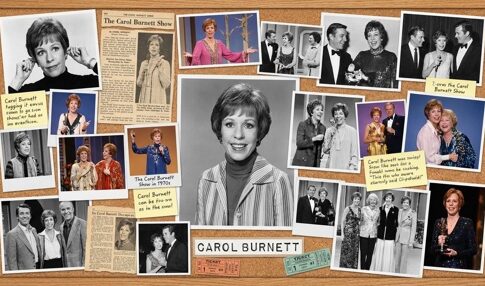
A Hollywood legend’s “really loud” on-set habit—shared this week by Carol Burnett—captures what modern entertainment has largely lost: unscripted, human comedy that didn’t need a political lecture.
Burnett’s podcast story revives a simpler kind of showbiz
Carol Burnett used a February 3 podcast appearance to recall a specific behind-the-curtain moment from The Carol Burnett Show, when Betty Grable guest-starred in 1968. Burnett described Grable as “adorable” and “very funny,” but said one recurring issue stood out: Grable’s burps were “really loud.” Burnett’s account, centered on timing and nerves before a live performance beat, landed as classic variety-show chaos.
It’s no question that Betty White is an icon! The Carol Burnett Show Channel is celebrating Women’s History Month by highlighting her many wonderful visits 💗 Catch Betty’s episodes, 3/9 and 3/23! https://t.co/pMkXniXs1C pic.twitter.com/l1lvJMY6sD
— Carol Burnett (@imcarolburnett) March 10, 2022
Burnett’s retelling placed the burping problem in a tight window—backstage, just before the cast’s cue for a “Hello, Dolly” barn dance sketch finale. Burnett said Grable would drink Coca-Cola frequently, and the burps would follow. The comedic pressure point, Burnett explained, was needing to perform immediately after cracking up, a familiar challenge for anyone who has had to keep it together right before the curtain goes up.
What happened backstage before the “Hello, Dolly” sketch
The most quoted line from Burnett’s story came from fellow performer Martha Raye, who was also involved in the sketch. Burnett said that after another loud burp from Grable backstage, Raye snapped with a blunt joke: “Oh, for God’s sakes, Betty, why don’t you just fart and save your teeth?” Burnett said the comment set her off laughing, even as the show demanded the cast move straight into the finale.
Because the account is tied to a specific date, platform, and identifiable participants, it is easy to separate what’s verified from what’s simply nostalgic embellishment. Burnett has firsthand credibility as the show’s star, and multiple entertainment outlets reported her comments in consistent detail. The coverage does not cite any dispute from estates or contemporaries, and there is no competing version of events. The only unresolved detail is the exact episode listing, which is not specified.
Why the anecdote is resonating again in 2026
Burnett’s story is circulating now for a practical reason: podcasts and streaming-era retrospectives have become the new archive for old television, turning once-private backstage moments into public oral history. Burnett’s long career, paired with renewed interest in her show, gives these small stories a second life. Unlike today’s entertainment cycle—often driven by outrage, ideology, or manufactured controversy—this moment is simply a veteran comedian sharing what happened.
What the story says about classic TV—and what it doesn’t
The reporting around Burnett’s anecdote is deliberately nonpolitical, and the facts support that: it is a comedic set story, not a culture-war manifesto. Still, it highlights a contrast many viewers recognize. Variety television in the late 1960s leaned on performance, timing, and chemistry rather than activism. For audiences exhausted by years of preachy corporate entertainment, Burnett’s account lands as a reminder that cultural institutions once trusted Americans to laugh without being instructed what to think.
Carol Burnett is recalling the time one of her Hollywood heroes guested on 'The Carol Burnett Show' and shocked her because she couldn't stop burping 'really, really loud.' https://t.co/LOtOzXW7E6
— Entertainment Weekly (@EW) February 16, 2026
On impact, the implications are limited but real for fans and the industry’s memory. The immediate effect is attention for the podcast and another spike of interest in the Burnett catalog. The longer-term value is preservation: stories like this humanize stars who are often flattened into poster images and film credits. Burnett’s description of Grable as charming—even while describing a disruptive habit—keeps the tone affectionate and rooted in firsthand experience.