
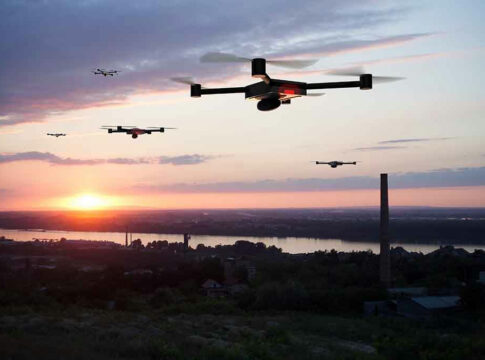
A Detroit suburb just launched Michigan’s first full-scale surveillance drone network that deploys flying cameras to crime scenes in under three minutes, raising urgent questions about privacy and government overreach in American communities.
Michigan’s First Automated Drone Response System Goes Live
Dearborn Police Chief Issa Shahin announced that his department activated Michigan’s first comprehensive Drone as First Responder program, positioning six Skydio drone hives at strategic locations throughout the Wayne County suburb. The automated system launches drones equipped with high-definition cameras, thermal imaging, speakers, and emergency parachutes to scenes of violent crimes, traffic crashes, missing persons cases, and property break-ins.
The drones reach emergency locations in under 2.5 minutes, providing officers with real-time aerial surveillance before they arrive on scene. Chief Shahin characterized the technology as a “force multiplier” that allows his department to “assess situations almost instantly” while keeping officers safer.
Proven Track Record Raises Effectiveness and Privacy Questions
Skydio drone systems currently operate in over 1,000 U.S. police departments, with Lakewood, Colorado, providing concrete performance data that illustrates both the technology’s effectiveness and its expanding role in law enforcement. Over 22 weeks, Lakewood Police handled over 1,200 calls, with drones serving as the first responders in 80% of incidents.
The department cleared 41% of these calls without ever dispatching officers to the scene, relying entirely on drone surveillance. Perhaps most significantly, all 115 arrests made during this period depended entirely on evidence gathered by the drones, demonstrating how surveillance technology now drives criminal prosecutions rather than simply supporting traditional police work.
Integrated Surveillance Network Expands Beyond Emergency Response
Dearborn’s drone program operates alongside a separate FUSUS real-time crime center that integrates thousands of camera feeds from city infrastructure, participating businesses, body cameras, and resident smartphones into a centralized monitoring system. Police officials emphasize the system activates only during 911 emergencies, with all access logged publicly, yet local business owners express mixed reactions. While Hamido restaurant owner supports faster emergency response, Cederland Bakery’s owner opposes automatic police access to private camera feeds, highlighting tensions between public safety claims and privacy protections. The department also deploys drones for non-criminal purposes, including flood inspections, storm damage assessments, monitoring illegal dumping, and documenting federal disaster aid, significantly expanding government aerial surveillance beyond criminal investigations.
Constitutional Concerns Mount as Surveillance Expands Nationwide
This technology expansion occurs without meaningful public debate about Fourth Amendment protections against unreasonable searches or limitations on government surveillance capabilities. While Chief Shahin credits community trust and promises transparency through public flight dashboards, the fundamental question remains whether Americans should accept permanent aerial surveillance networks that can deploy within minutes to monitor citizens during emergencies defined by government officials.
The Dearborn program operates in extreme temperatures from negative four to 122 degrees Fahrenheit, ensuring year-round surveillance capability regardless of weather conditions. As similar systems proliferate across America’s cities, citizens face growing pressure to accept intrusive monitoring as the new normal for public safety, despite legitimate concerns about mission creep and constitutional boundaries on government power.
The deployment represents a critical moment for Americans who value privacy and limited government. While supporters argue that drones enhance officer safety and reduce response times, the technology fundamentally alters the relationship between citizens and law enforcement by normalizing constant aerial surveillance capability.
The integration with extensive camera networks and the expansion beyond emergency response into routine civic functions demonstrate how quickly “public safety” justifications enable comprehensive monitoring systems that previous generations would have recognized as incompatible with free society. Conservative Americans concerned about government overreach should demand clear constitutional limits, robust oversight mechanisms, and sunset provisions before these surveillance networks become permanent fixtures above our communities.
Sources:
Futurism – Police in Detroit Suburb Install Hives That Can Instantly Deploy Drones to Fight Crime
FOX 2 Detroit – City of Dearborn unveils Drone as First Responder program for police