
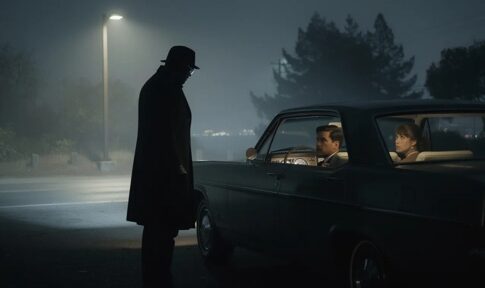
An explosive new theory claims a single war-scarred medic may have been both the Zodiac Killer and the Black Dahlia murderer—raising hard questions about how America’s institutions handled these infamous crimes for nearly 80 years.
AI sleuth’s cipher breakthrough shakes two legendary cold cases
Florida amateur codebreaker Malek “Mal” Baber did what generations of expensive task forces, blue-ribbon panels, and big-city police departments could not: he claims to have cracked the Zodiac’s notorious 13-character “My name is” cipher and pulled out a real, documentable name. Using AI tools, Baber generated millions of candidate names, then cross-referenced them with witness descriptions and public records until one stood out—Marvin Merrill, an alias for Chicago-born Navy corpsman and pre‑med student Marvin Leon Margolis.
According to detailed reporting, Baber spent years running this research in the background of his ordinary life, driven less by government grants and more by sheer persistence. His work echoes the private team that cracked another Zodiac cipher in 2020, again proving that everyday citizens with grit, math skills, and modern computing can sometimes outperform sprawling bureaucracies. For readers tired of watching Washington waste money while problems go unsolved, this entire saga feels both vindicating and infuriating.
From Hollywood roommate to vanished suspect: Margolis and the Black Dahlia
Evidence gathered by Baber and later checked by journalists paints a chilling picture of Margolis’s proximity to the 1947 Black Dahlia murder. Records indicate he lived with aspiring actress Elizabeth Short for 12 days in a Hollywood apartment just months before she was found mutilated, surgically severed at the waist, and posed in a vacant Los Angeles lot. When questioned, Margolis first lied about knowing her, then admitted cohabitation, and soon left California for Chicago, adopting the alias Marvin Merrill.
Margolis’s background only deepens suspicions. As a Navy corpsman in the brutal Pacific theater, he performed rough battlefield medicine and aspired to become a surgeon, only to be denied that path by the Navy’s postwar system. Psychiatric notes described combat trauma, recurring nightmares, and resentment over his blocked surgical ambitions. Later, a haunting 1992 sketch titled “Elizabeth,” signed “Marty Merrill ’92,” features disturbing symbolism that Baber and two retired detectives interpret as a veiled confession linked to both the Dahlia case and the Zodiac persona.
Zodiac and Black Dahlia killer may have been same man, amateur codebreaking whiz claims: ‘Irrefutable’ https://t.co/Spkg8SPnMf pic.twitter.com/JCpnEg2qrr
— New York Post (@nypost) December 24, 2025
Zodiac terror, symbolic breadcrumbs, and the failure of officialdom
More than twenty years after the Black Dahlia killing, the Zodiac Killer began terrorizing Northern California, murdering at least five known victims between 1968 and 1969 and mailing taunting letters and ciphers to newspapers. Baber argues the Z‑13 cipher hides the name “Marvin Merrill,” and that Margolis’s later artwork even embeds the word “Zodiac” in its shading. Two retired LAPD homicide detectives who reviewed Baber’s multi‑hundred‑page dossier now say the links between Margolis, the Dahlia, and the Zodiac are overwhelming—though still circumstantial.
Despite that, no active agency has publicly embraced the theory, ordered targeted DNA testing tied to Margolis, or moved to declare either case closed. For many conservatives, this fits a familiar pattern: institutions slow to admit mistakes, defensive about past failures, and more focused on protecting reputations than delivering truth. While politicians blow billions on pet projects and foreign adventures, families of American victims wait decades for closure that might have been within reach if officials had been more transparent and less territorial.
The theory’s rise also exposes how elite media shape public perception. The Los Angeles Times produced a careful, heavily sourced investigation that stresses the case is provocative but unproven, while outlets like the Daily Mail and local Patch editions distill the story into punchier narratives suggesting a near-solution. That contrast matters for readers trying to separate sober fact from sensational spin. What remains constant across coverage is that a private citizen, not a task force, wove together military files, psychiatric notes, old interviews, and coded messages into a single, testable suspect profile.
What this mystery says about justice, trust, and the system
Even if Margolis is ultimately confirmed—or decisively ruled out—the road to that answer tells us something bigger about modern America. These legendary cases span the rise of big-city machines, Hollywood sensationalism, and today’s AI‑driven information age. Along the way, government agencies guarded files, cycled detectives, and allowed promising leads to fade, while ordinary people were left to consume endless documentaries and theories instead of clear accountability. That pattern mirrors what many of you feel on immigration, crime, and spending: lots of talk, little follow-through.
For constitutional conservatives, the lesson is not to hand more unchecked power or secrecy to the same institutions that let these cases drift for generations. Instead, it is to insist on transparent policing, rigorous evidence standards, and the free-speech space for citizen investigators to challenge official narratives. Whether Baber’s theory stands or falls under future DNA and forensic scrutiny, it reminds us that vigilance does not belong to government alone—and that truth, like justice, often comes from outside the system, not from within it.
Sources:
Zodiac Killer Tied To Black Dahlia Murder: FL Sleuth Report
New theory links Zodiac killings to Black Dahlia murder
Amateur sleuth may have solved the Black Dahlia and Zodiac killings
A lot of insight in this article. If only it would be headed.