
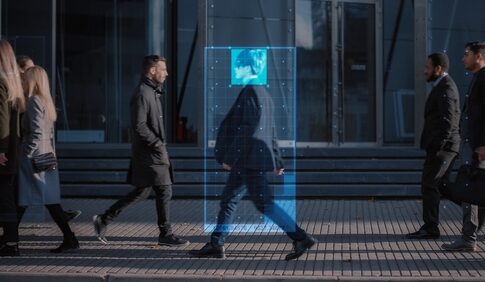
A London shopper was publicly humiliated and forcibly ejected from his local Sainsbury’s supermarket after facial recognition technology flagged him as a criminal—except he wasn’t, exposing the dangerous reality of unchecked surveillance creeping into everyday American-style freedoms abroad.
Innocent Shopper Treated Like Criminal in Public Ejection
Warren Rajah, a 42-year-old data strategist, experienced what he called the “most humiliating moment of my life” at his local Sainsbury’s in Elephant and Castle, south London. Store staff approached him while he was shopping, confiscated his purchases, and escorted him out, pointing to signage about Facewatch facial recognition technology. Rajah, a longtime customer at the location, received no explanation beyond the system’s alert. He later submitted his passport and photo to Facewatch, which confirmed he was not in their offender database.
Both Sainsbury’s and Facewatch attributed the incident to staff error rather than a technological malfunction. According to their statements, another individual flagged by the system was present in the store, but staff mistakenly confronted Rajah instead. Sainsbury’s issued an apology in early February and offered a £75 voucher, while committing to additional training for Elephant and Castle employees. Facewatch echoed the apology, emphasizing that human verification protocols failed, not the facial recognition software itself, which claims 99.98 percent accuracy.
Surveillance Expansion Amid Rising Retail Crime
Sainsbury’s began trialing Facewatch facial recognition technology in September 2025 across select stores in Bath, Sydenham, and multiple London locations, including Elephant and Castle, Dalston, Ladbroke Grove, Camden, and Whitechapel. The retailer justified the rollout by citing surging retail crime rates post-COVID, with shoplifting and staff abuse incidents climbing sharply across the UK.
Pilot programs reported a 92 percent drop in repeat offenders and a 46 percent reduction in theft and aggression, prompting expansion to seven stores by early 2026. The cloud-based Facewatch system matches customer faces against shared offender databases among participating retailers.
This technology mirrors troubling trends seen in authoritarian regimes, where mass surveillance erodes individual privacy under the guise of public safety. While Sainsbury’s touts crime-reduction statistics, the Rajah incident exposes critical flaws in its implementation. Signs informing shoppers of facial recognition use exist, but Rajah criticized the lack of clarity around customer rights and procedures when misidentification occurs. The system requires human review before action, yet staff disregarded this safeguard, illustrating how unchecked power in private hands can trample basic dignity and due process principles that conservatives fiercely defend against government and corporate overreach alike.
Privacy Concerns and Accountability Gaps Spark Outrage
Rajah, leveraging his background as a data professional, labeled the incident “borderline fascistic” and “Orwellian” in media interviews published February 3-5, 2026, by outlets including the Evening Standard and The Independent. He vowed never to shop at Sainsbury’s again, highlighting how corporations deploying invasive tech often provide inadequate recourse for victims.
The UK’s Information Commissioner’s Office acknowledged the crime-fighting benefits of facial recognition but warned that the risk of misidentification demands robust data protection procedures to ensure accuracy and integrity. This regulatory acknowledgment underscores systemic vulnerabilities that no apology or voucher can rectify.
The broader implications are chilling for anyone who values freedom from arbitrary intrusion. If a loyal customer for ten years can be publicly shamed without evidence, what protections are there for others? Retailers like Sainsbury’s wield immense power through shared offender databases, yet accountability remains minimal—staff training adjustments hardly address the fundamental problem of surveillance creeping into private commerce.
For conservatives who champion individual liberty and limited intrusion, this case serves as a stark reminder: technology sold as a means of security can quickly morph into a tool of control, eroding trust and constitutional principles such as the presumption of innocence. The line between safety and tyranny blurs when corporations act as judge and jury, enabled by algorithms and human fallibility.
Sources:
Sainsbury’s facial recognition error leads to shopper ejection – The Independent
Sainsbury’s apologizes after facial recognition error sparks outcry – Evrimagaci
Sainsbury’s issues apology to shopper over facial recognition mix-up – The Grocer