
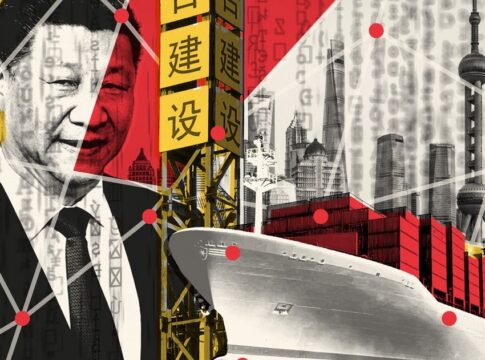
While America scales back foreign engagement, Chinese President Xi Jinping is aggressively expanding his nation’s global influence through massive infrastructure investments and military displays, positioning Beijing to challenge American leadership worldwide by 2049.
Military Might on Full Display
Xi Jinping stood above Mao Zedong’s portrait at Tiananmen Square this week, reviewing thousands of marching soldiers alongside intercontinental ballistic missiles, rocket launchers, and advanced battle tanks. Twenty-six heads of state attended, including Russian President Vladimir Putin and leaders from Asia, Africa, Latin America, and the Middle East. Europe sent only autocratic-leaning figures from Russia, Slovakia, and Serbia. The 72-year-old Chinese leader has a clear timeline: transform China into what he calls a modern socialist superpower by 2049, the hundredth anniversary of communist rule.
Economic projections suggest China could surpass America as the world’s largest economy within fifteen years. Xi’s Belt and Road Initiative now includes 153 nations, funding massive projects from high-speed railways in Kenya to Peru’s new Chancay megaport. The China-led Asian Infrastructure Investment Bank finances these ventures, though concerns persist about labor rights violations and environmental damage. Chinese contractors use Chinese money to deploy Chinese workers globally, while partner nations shoulder crushing debt burdens that give Beijing enormous political leverage over borrower countries.
Debt Trap Diplomacy
Beijing’s financial strategy doubles as foreign policy enforcement. Countries criticizing China’s human rights abuses in Tibet or against Uyghur Muslims face immediate punishment and funding cuts. Nations recognizing Taiwan as part of China receive financial rewards. Former Nigerian President Olusegun Obasanjo recently urged African countries to embrace this authoritarian development model, calling China’s progress inspirational for Africa. This troubling endorsement comes as President Trump dismantled USAID and slashed five billion dollars in previously allocated foreign aid, creating a vacuum China eagerly fills.
American Leadership at Stake
China’s authoritarian capitalism presents a fundamental challenge to American values of freedom and constitutional governance. Xi claims to oppose hegemony while building exactly that through economic coercion and military expansion. As Washington retreats from global engagement, Beijing advances an alternative world order incompatible with liberty, human rights, and rule of law. The question facing America is whether we will reassert principled leadership or allow communist China to reshape international norms according to authoritarian preferences that threaten freedom worldwide.