
New York City’s new $127 billion budget plan is so bloated that it’s bigger than Florida’s entire state budget—despite serving barely a third of Florida’s population.
DeSantis’ per-capita comparison turns a budget fight into a national warning
Florida Gov. Ron DeSantis went viral after responding to a social media post comparing New York City’s preliminary $127 billion budget to Florida’s $117 billion state budget. DeSantis added the population context—Florida has more than 23 million residents, while New York City has about 8 million—arguing that the “warmth of socialism” comes with an eye-watering per-person price tag. The message landed because it reduced a technical budget debate into a simple, relatable contrast.
The numbers do not, by themselves, prove waste or efficiency; states and cities fund different mixes of services, and New York’s cost structure is famously high. But DeSantis’ point targets something voters already feel: government grows fast, then asks families to “just pay a little more” even when inflation and everyday costs stay punishing. For conservatives who want limited government, the per-capita comparison raises a basic question—why is a city budget approaching state-sized scale?
Mamdani’s agenda: big affordability promises, backed by new taxes
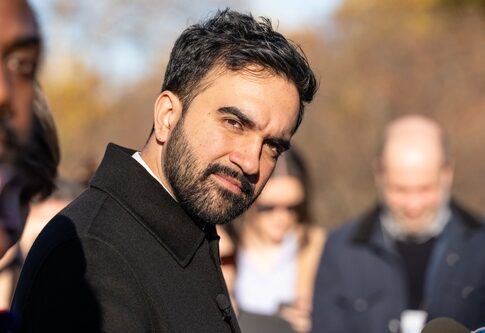
Mayor Zohran Mamdani, a self-described democratic socialist and former state assembly member, ran on affordability programs that carry major price tags. Reported signature promises included universal daycare estimated at $6 billion per year, fare-free buses estimated at $1 billion per year, and a housing goal of 200,000 affordable units with a decade-long cost estimate around $100 billion. Supporters see those ideas as relief for working families; critics see a spending spree without firm guardrails.
City finances are already strained. Research cited in multiple reports places New York City’s budget gap around $12.6 billion, with revenue volatility complicating the path forward. Mamdani’s approach emphasizes raising revenue rather than reducing commitments. Among the tax ideas reported: a new 2% city income tax on earners above $1 million aimed at raising roughly $4 billion, plus pushing for a higher state corporate tax rate that could generate about $5 billion in shared revenue. Those are large numbers—but they still do not automatically close the full gap.
Albany holds the keys, and Hochul is signaling restraint
New York’s state budget cycle adds another layer of uncertainty because City Hall cannot simply enact many of the taxes it is floating without state approval. Gov. Kathy Hochul has proposed a state budget reported at about $260 billion while publicly steering away from broad income-tax hikes, emphasizing restraint amid volatility. That sets up a political and fiscal collision: Mamdani’s city plan assumes Albany will help deliver new revenue, while the governor is signaling caution about policies that could damage competitiveness.
Mamdani’s allies argue the city has long been shortchanged, pointing to the claim that New York City generates 54.5% of state tax revenue but receives only 40.5% back, and that past cost shifts during the Cuomo years worsened the imbalance. Even if those arguments resonate, the practical hurdle remains: legislative negotiations decide the final levers, and timelines are tight with the state budget due by April 1, 2026. Until Albany acts, many of City Hall’s funding assumptions remain just that—assumptions.
What the tax-hike strategy risks for families, jobs, and constitutional culture
Tax hikes on high earners and corporations are politically attractive in deep-blue territory, but the downside is not theoretical: the same mobile taxpayers and businesses being targeted can change addresses, investments, or expansion plans. Research summaries also note warnings that failure to secure state help could push the city toward property-tax pressure—often a direct hit on homeowners and renters through higher costs. Conservatives view this dynamic as a familiar pattern: government expands first, then spreads the bill to everyone when “tax the rich” underdelivers.
Florida Governor Ron DeSantis Adds Mind-Blowing Perspective to Zohran Mamdani’s Budget Woes in New York City https://t.co/pUvDb70FDn
— HornblowerX (@hornblowerx) February 19, 2026
DeSantis’ broader contrast is that Florida politics are currently pushing in the opposite direction, including renewed emphasis on property-tax relief and fiscal efficiency. That matters to voters watching from outside New York because the policy divide is not just about spreadsheets; it affects migration, business location decisions, and the everyday freedom that comes with lower tax burdens and less bureaucracy. The immediate outcome in New York is still unsettled, but the budget debate has become a national case study in what big-government ambition costs per person.
Sources:
WTF!? Ron DeSantis Puts Mayor Mamdani’s NYC Budget Proposal into Warmth of Socialism Perspective
Zohran Mamdani wants to tax the rich, but Kathy Hochul opts for restraint
‘Locked in their homes’: Gov. DeSantis calls fractured Legislature to focus on property tax cuts