
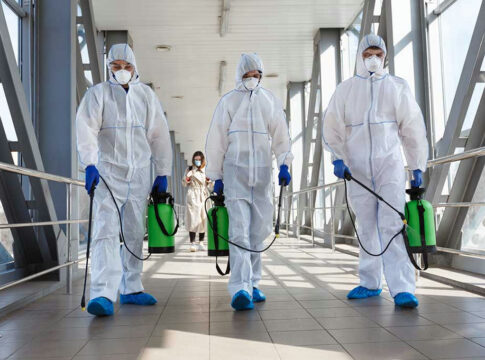
A fast-moving “super” flu is colliding with lingering COVID-era habits, giving officials a fresh excuse to flirt with school shutdowns and mask rules that many parents thought were gone for good.
Flu “K” Strain Hits Schools Hard While Parents Fear Repeat of COVID Disruptions
In at least 10 US states and parts of the United Kingdom, schools are now grappling with an early, unusually intense flu season driven by a fast-spreading H3N2 variant nicknamed the “K” strain. Administrators report waves of absences among students and staff, with some districts temporarily closing buildings or shifting to short-term online learning. Parents who endured years of COVID shutdowns view even brief closures with suspicion, worried that temporary steps could again morph into open-ended disruption.
In Wales, one widely watched case at St Martin’s School in Caerphilly shows how quickly outbreaks can escalate. The school shut its doors after 242 pupils and 12 staff members fell ill with symptoms ranging from vomiting and diarrhea to high fevers, cough, headaches, and exhaustion. Officials moved classes online for several days while deep cleaning took place. That incident has become a reference point for American districts weighing when absenteeism justifies closing their own facilities.
US Schools Walk a Tightrope Between Health Concerns and Classroom Stability
In the United States, the flu surge follows a 2024–2025 season that already saw closures in states like Texas, Ohio, Oklahoma, Georgia, Virginia, and Tennessee due to similar outbreaks. This year’s wave is hitting schools early again, and attendance data in many districts is flashing the same warning signs. School nurses note that a spike of more than 10% in chronic absenteeism has historically signaled a serious flu problem, a threshold that some communities now appear to be crossing as the “K” strain circulates.
Unlike the sweeping COVID shutdowns that shuttered entire systems for months, current responses remain localized and relatively brief, usually lasting only a few days while buildings are cleaned and students recover. Many superintendents, burned by the academic and emotional fallout of long-term remote learning, are resisting broad closures unless necessary. They describe a tricky balancing act: protecting health, keeping classrooms open, and respecting families who are deeply skeptical of renewed mandates and top-down orders from distant bureaucracies.
Case Counts Rise as Vaccine Mismatch and Weak Infrastructure Limit Options
Federal data show that the current flu season is building momentum fast. In the week before December 3, national influenza test positivity climbed from 2.9 percent to 5 percent, a sharp jump signaling widespread community transmission. The H3N2 “K” strain carries several mutations that differ from the strain targeted in this year’s vaccine, meaning shots may offer only partial protection. Public health experts still urge vaccination, arguing that even reduced effectiveness can lower the odds of severe illness, hospitalization, and death.
Vaccination rates among school-aged children, however, remain stubbornly low, with fewer than half of US students receiving flu shots last year and no state requiring flu vaccination for school attendance. At the same time, years of political fighting and budget tightening have left parts of the public health system weaker. Local officials describe stretched staff, limited surge capacity, and confusion about who will fund extra clinics, testing, or protective equipment if the season worsens. That leaves schools juggling health guidance with limited direct support.
Families Confront Renewed Disruptions and the Shadow of Past Mandates
For families, the immediate impact is painfully familiar: sudden school closures, last-minute childcare scrambles, and worries about kids losing classroom time. Parents of younger students, who already paid a steep price in learning loss and behavioral issues during the COVID era, are particularly wary. Even when closures last only a few days, they revive concerns that health bureaucracies and risk-averse administrators may again prioritize blanket restrictions over common-sense, targeted measures that keep most children in school and life as normal as possible.
Deadly 'super' flu surge forces schools to close and triggers mask mandates across the US https://t.co/Q4JZR3oWWs
— Daily Mail US (@Daily_MailUS) December 9, 2025
The political debate around these decisions is intensifying as well. Some activists and experts call for aggressive steps such as renewed mask mandates in schools and public spaces, arguing that any tool that slows the spread is justified. Many conservative parents counter that masks and remote learning carry real costs for children’s development and freedom, and they question whether incremental gains in transmission control outweigh those harms. They insist that emergency powers and mandates must not quietly reappear every time a new variant emerges.
Conservatives Push for Targeted Responses That Respect Liberty and Learning
Against this backdrop, right-leaning policymakers and parents advance a different blueprint for handling the “K” strain and future outbreaks. They emphasize transparent data, parental choice, and limited, locally controlled interventions over sweeping national rules. Rather than defaulting to mandates, they favor empowering families with clear risk information, ensuring schools improve ventilation, supporting voluntary vaccination, and protecting the right to keep classrooms open whenever hospitals are not overwhelmed. Their core message is simple: safeguard health, but never again at the expense of constitutional freedoms and children’s futures.
Sources:
Flu outbreak forces Welsh school shutdown as US cases surge
Flu is closing schools in at least 10 states: What to know
Schools disrupted amid rise in flu cases