
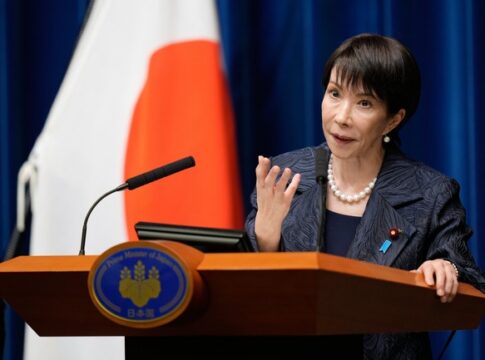
President Trump defended his decision to keep allies in the dark about military strikes on Iran by invoking Pearl Harbor during a meeting with Japanese Prime Minister Sanae Takaichi, demonstrating his characteristic directness on matters of national security and operational secrecy.
Surprise Attack Defense Draws Historical Parallel
During Thursday’s Oval Office meeting, a Japanese reporter questioned why the United States failed to alert allies like Japan before the February 28 Iran strikes. Trump responded by emphasizing the critical importance of operational security. The president stated his administration told no one about the military action in advance because surprise was essential to the mission’s success. When explaining why advance notification was impossible, Trump referenced the 1941 surprise attack, turning the historical moment into a pointed explanation of military strategy.
Prime Minister Takaichi’s visit came amid media speculation about whether Operation Epic Fury would strain the relationship between the two nations. Despite concerns, Takaichi declared that only President Trump could bring peace to the world, signaling continued strong ties between Washington and Tokyo. The prime minister arrived Wednesday night for discussions that extended beyond the Iran situation to broader strategic partnerships.
A Repeated Reference With Context
Trump previously used the Pearl Harbor reference during a June 2018 meeting with then-Prime Minister Shinzo Abe. During that encounter, Trump stated he remembered Pearl Harbor before critiquing Japan’s economic policies and the United States trade deficit. The president urged Abe to negotiate a bilateral trade deal more favorable to American exporters of beef and automobiles. Despite the pointed remarks, the relationship between Trump and Abe remained strong, with the two leaders meeting eight times and speaking by phone 26 times during Trump’s first term.
Strategic Relationships and Direct Communication
White House officials characterized Trump’s approach with Japanese leaders as uniquely candid yet respectful. One United States official noted Trump never disparaged Abe, unlike his treatment of many other world leaders. The president viewed Abe as a savvy negotiator and worthy counterpart. The current meeting with Takaichi follows this pattern of direct communication mixed with personal rapport. Trump’s willingness to use historical references, even uncomfortable ones, reflects his negotiating style that prioritizes American interests while maintaining crucial alliances. The Japan-United States relationship remains critical to Pacific security and economic cooperation despite occasional blunt exchanges.