
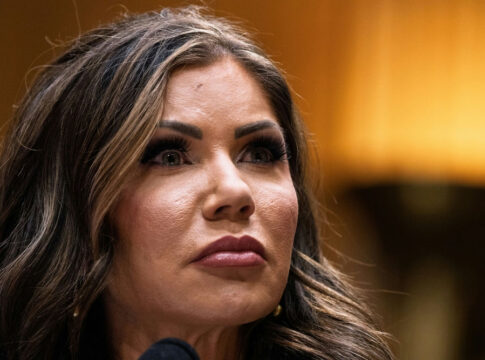
DHS Secretary Kristi Noem’s refusal to answer a direct question about an alleged affair under oath reportedly cost her the job, proving that even in Washington’s scandals, it’s not always the crime but the coverup that seals your fate.
When Personal Questions Become National Security Concerns
Rep. Sydney Kamlager-Dove didn’t mince words during the congressional hearing. She asked Kristi Noem point-blank whether she had engaged in sexual relations with Corey Lewandowski during her tenure as DHS Secretary. Noem’s response avoided the question entirely, expressing shock at what she termed offensive tabloid fodder. That non-answer, sources claim, ended her cabinet career faster than any policy failure could have. The question wasn’t designed for entertainment value. Kamlager-Dove framed it around judgment, potential conflicts of interest, and whether personal relationships compromised decision-making authority over 260,000 federal employees responsible for protecting America’s borders and homeland security infrastructure.
The Shadow Advisor With Outsized Influence
Corey Lewandowski held no official DHS position. As a White House special government employee, he maintained outside business interests while advising the administration. Yet multiple reports suggest he wielded remarkable influence over department operations. The allegations paint a troubling picture: a Coast Guard pilot reportedly fired after refusing to accommodate a request involving Noem’s blanket during jet service, forcing the pilot onto a commercial flight home. Then there’s the matter of $20 million in contracts awarded to newly formed Republican-linked companies without competitive bidding. Courts approved these arrangements, but the optics reinforced concerns about favoritism infecting an agency tasked with post-September 11th security responsibilities.
The Clinton Parallel Nobody Missed
Political observers immediately invoked Bill Clinton’s 1998 grand jury testimony. Clinton famously parsed the meaning of “is” while discussing his relationship with Monica Lewinsky, ultimately facing impeachment for perjury and obstruction. Noem faced a similar dilemma under oath. Answer yes, and she admits to conduct that raises immediate conflict-of-interest questions. Answer no falsely, and she commits perjury. Her choice to deflect rather than deny spoke volumes to those watching. Television panels noted the legitimacy of asking powerful officials about relationships that might compromise their judgment. When personal entanglements potentially influence who gets fired, who receives contracts, and how national security decisions get made, the bedroom becomes a boardroom issue whether anyone likes it or not.
The timing couldn’t have been worse for the Trump administration. Anonymous sources told reporters that the president had reached his breaking point with the Noem situation even before the hearing. Her performance before Congress simply confirmed his instinct. Trump built his political brand partly on demanding loyalty and competence from appointees while maintaining zero tolerance for public embarrassment. Noem’s refusal to provide a clean denial gave ammunition to political opponents heading into 2026 midterm elections. Democrats seized the moment to question vetting processes and ethical standards for cabinet officials. Republicans found themselves defending the indefensible or remaining conspicuously silent.
What Special Government Employees Actually Do
Most Americans never heard of special government employees before this scandal. The designation allows thousands of individuals across federal agencies to provide expertise while maintaining outside employment. The arrangement theoretically brings valuable private sector knowledge into government service. In practice, it creates murky ethical situations where personal financial interests might conflict with public responsibilities. Lewandowski’s role exemplified these dangers. With personal ties to a cabinet secretary and apparent authority to influence personnel decisions and contract awards, he operated in precisely the gray zone that gives ethics watchdogs nightmares. The affair allegations transformed that gray zone into a glaring red flag about compromised national security decision-making.
DHS oversees everything from immigration enforcement to cybersecurity, from disaster response to Secret Service protection. Its 260,000 employees represent the third-largest cabinet department. Leadership matters enormously in an agency born from September 11th’s failures to connect intelligence dots and coordinate responses. When rumors swirl about the secretary’s judgment being clouded by romantic involvement with an informal advisor who fires pilots and steers contracts, it undermines confidence in the entire operation. Career professionals wonder whether merit or personal connections drive advancement. Congressional overseers question whether they can trust testimony. Foreign adversaries look for exploitable weaknesses in leadership focus and integrity.
The Accountability Question Nobody Wants to Answer
Should powerful officials face questions about relationships that might compromise their judgment? Common sense suggests yes, particularly when concrete allegations of favoritism emerge. The fired pilot wasn’t imaginary. The no-bid contracts existed on paper. Lewandowski’s unusual access to DHS operations came from somewhere. Noem could have ended speculation with a direct denial if the allegations were false. Her choice not to do so left reasonable people drawing reasonable conclusions. Trump apparently drew his own conclusion quickly. Whether that represents accountability in action or political expediency in embarrassing circumstances depends largely on your partisan perspective. Either way, a cabinet secretary lost her position not because she answered a question, but because she wouldn’t.
Noem's answer on 'sexual relations' with Lewandowski was 'final straw' for Trump, sources say https://t.co/GWkkRh8sJx
— ANTONIO (@blusewillis2) March 6, 2026
The fallout extends beyond one ousted official. Future nominees will face heightened scrutiny about personal relationships and potential conflicts. Special government employee arrangements will likely undergo fresh examination regarding access and authority limits. Congressional hearings may see more aggressive personal questioning when policy concerns intersect with conduct issues. The normalization of asking cabinet officials direct questions about alleged affairs under oath represents either a disturbing descent into tabloid governance or necessary accountability for those wielding enormous power. The answer probably depends on whether you believe personal conduct can be separated from professional judgment when national security hangs in the balance. Kristi Noem’s non-answer suggests she knew it couldn’t be separated. Donald Trump’s reported decision to remove her suggests he agreed.
Swalwell was having sex with a spy and he’s still wasting government money