
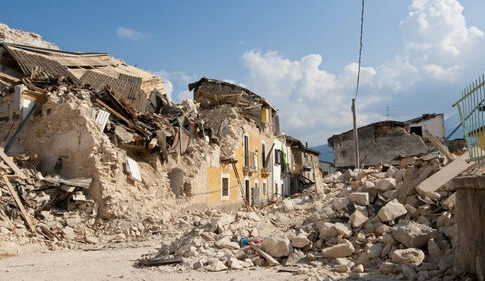
Israel shattered the fragile calm of a US-backed ceasefire by launching airstrikes on Beirut’s southern suburbs, targeting a senior Hezbollah commander and reigniting fears of a broader regional war.
Story Snapshot
- Israeli warplanes struck Dahiyeh, Beirut’s southern suburb and a known Hezbollah stronghold, marking the first strike near the Lebanese capital since an April ceasefire took hold.
- Israel’s military said the strike killed Ahmed Ali Balout, a commander in Hezbollah’s elite Radwan force, whom Israel accused of planning an invasion into Israeli territory.
- Israel’s military chief ordered troops to expand the area under Israeli control in southern Lebanon as the operation against Hezbollah intensified.
- Lebanon reported at least four dead in the strike, while thousands of residents fled the southern suburbs following Israeli evacuation warnings.
Israel Strikes Beirut for First Time Since Ceasefire
Israeli warplanes struck Dahiyeh, the southern suburbs of Beirut, in what Israel described as a targeted military operation against Hezbollah infrastructure. The strike marked the first Israeli attack near the Lebanese capital since a ceasefire brokered with US support took effect in April. Israeli forces issued evacuation warnings before the strikes, and Lebanese state media confirmed the attack shortly after. The move drew immediate international attention given its timing and proximity to a fragile diplomatic agreement. [1]
The Israeli military said its warplanes hit Hezbollah’s underground drone storage facilities and command centers embedded within Dahiyeh. The area is a densely populated neighborhood and a traditional Hezbollah stronghold. Lebanon’s government reported four people were killed in the strike. Thousands of residents fled the area following the Israeli military’s forced evacuation orders, as footage showed crowds streaming out of the southern suburbs. [3] [4]
Hezbollah Commander Killed, Invasion Plot Cited
Israel’s military announced it had killed Ahmed Ali Balout, identified as a senior commander within Hezbollah’s Radwan force — the group’s elite ground combat unit. Israel stated Balout was actively planning a cross-border invasion from Lebanon into Israeli territory, framing the strike as a preemptive defensive action rather than an unprovoked escalation. The Radwan force has long been considered one of Hezbollah’s most capable and aggressive military components, trained specifically for offensive ground operations. [6]
Israel’s military chief simultaneously ordered troops to expand the zone under Israeli control in southern Lebanon, signaling that the operation was not a one-off strike but part of a deliberate and intensifying campaign against Hezbollah positions. The dual announcements — a high-value kill and a geographic expansion — suggest Israel views the current moment as an opportunity to degrade Hezbollah’s military capacity while the group remains weakened from prior engagements. [2]
Ceasefire Tensions and Regional Fallout
The strikes came despite a ceasefire deal that had been supported by the United States, raising immediate questions about the agreement’s durability and Washington’s ability to restrain Israeli military action. Iran, which backs and funds Hezbollah, had previously warned that Israeli strikes on Lebanese territory would cross established red lines. Iranian officials moved quickly into emergency consultations following the Beirut attack, with regional observers watching closely for any retaliatory response from Tehran or Hezbollah itself. [5]
🇮🇱 🇮🇷 Israel has launched airstrikes on Beirut, the capital of Lebanon.
Earlier this week, Iran warned that it would respond if Israel carried out such an attack.
Following the strikes on Beirut, reports indicate that Iran’s Supreme National Security Council has convened an…
— Digital Dynasty (@digitaldynastyz) June 7, 2026
From a conservative standpoint, Israel’s actions reflect a straightforward security calculation: a nation facing a documented military threat from a designated terrorist organization does not surrender its right to self-defense because a ceasefire is on paper. Hezbollah has never renounced its goal of destroying Israel, and allowing its commanders to plan cross-border invasions unimpeded would be strategically reckless. The harder question for American policymakers is whether the US-backed ceasefire framework has enough teeth to constrain either side — or whether it was always more of a pause than a peace. [4] [6]
Sources:
[1] Web – Israel Strikes Beirut’s Southern Suburbs Days After US-Supported …
[2] YouTube – Israeli army announces start of airstrikes on southern Beirut suburb
[3] YouTube – Residents flee Beirut’s southern suburbs after Israel orders strikes
[4] YouTube – Israeli air strikes hit Beirut: Lebanon’s southern suburb of Dahieh …
[5] YouTube – Israeli strikes hit Beirut’s southern suburbs amid new evacuation …
[6] YouTube – Israel launches new strikes on Beirut: Military says it is …