
Wisconsin voters face a critical Supreme Court election that could cement liberal control of the state’s highest court for the next six years, with profound implications for abortion rights, election law, and constitutional interpretation in this battleground state.
The Stakes: Expanding Liberal Majority
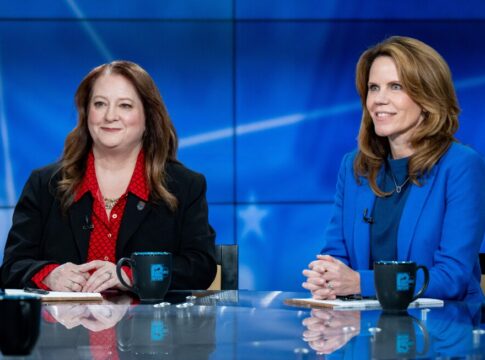
Court of Appeals Judges Chris Taylor and Maria Lazar are competing to fill a vacant seat on the Wisconsin Supreme Court. If Taylor wins, liberals would expand their majority from 4-3 to 5-2, securing control through at least 2030. The election is officially nonpartisan, but support breaks down along clear partisan lines. Taylor has centered her campaign heavily on abortion rights, running television advertisements emphasizing reproductive freedom. Both candidates participated in a televised debate on April 2, 2026, hosted by WISN 12 News in Milwaukee.
Recent Court Transformations
Since liberals gained control, the Wisconsin Supreme Court has reversed multiple conservative rulings that shaped the state’s electoral landscape. The court overturned a ban on absentee ballot drop boxes, marking a significant shift in voting access. Liberals have framed recent elections as defending democracy itself, pointing to a 2020 decision when the conservative-controlled court came within one vote of siding with President Trump’s attempt to invalidate enough ballots to overturn his Wisconsin loss. The court’s composition directly impacts how election disputes will be resolved heading into the 2028 presidential election.
Historical Context and Future Impact
Wisconsin’s Supreme Court has emerged as one of the nation’s most consequential state courts, regularly deciding cases that affect national politics. The state’s status as a perennial presidential battleground magnifies every judicial decision involving election procedures, redistricting, and voting rights. Conservative justices previously shaped Wisconsin law for over a decade before liberals began gaining seats in recent years. The upcoming election represents a potential turning point that could entrench one ideological approach to constitutional interpretation for the remainder of the decade, affecting everything from state legislative maps to executive power questions.
What This Means
This judicial election carries weight far beyond typical state court races. With control of Wisconsin’s Supreme Court potentially locked in for six years, decisions on fundamental questions about election integrity, individual rights, and constitutional limits on government power will reflect whichever judicial philosophy prevails. Both sides recognize that state supreme courts increasingly serve as the final arbiters of disputes that shape American democracy, making this Wisconsin race a proxy battle for competing visions of constitutional governance.