
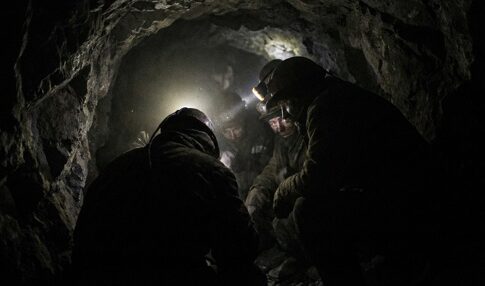
When a mountain swallows 200 people in seconds, but armed rebels insist only five died, you’re witnessing the collision between truth and power in one of Earth’s most mineral-rich—and most broken—regions.
The Credibility Gap That Matters
When eyewitness miners like Ibrahim Taluseke report recovering over 200 bodies while rebel officials claim only five people died, you’re not dealing with a simple accounting error. You’re watching power dynamics play out in real time. Taluseke’s observation that mine owners actively suppress death toll reporting reveals the stakes: admitting the true human cost threatens operational legitimacy and invites international scrutiny.
A Pattern of Catastrophe
January 2026 brought the first major collapse at this same site, killing at least 200 people with some estimates exceeding 400 when including the missing. Two months later, history repeats itself with identical casualty figures and identical denial from the same controlling authority. This isn’t coincidence; it’s evidence of systematic negligence. The mining zone had been officially designated a “red zone” since November 2025—prohibiting all mining operations—yet work continued.
Who Controls the Narrative Controls the Numbers
M23 seized Rubaya in May 2024 and has profited handsomely, extracting at least $800,000 monthly from coltan taxation. The rebel group’s financial interest in minimizing the disaster’s severity is obvious. Their attribution of the collapse to “bombings” rather than the documented landslide following heavy rains contradicts accounts from local residents like David Kasereka, who witnessed the earth literally swallow people during the rainfall event.
The Global Technology Connection
Your smartphone, laptop, and aircraft avionics depend on tantalum from places like Rubaya. The DRC produces roughly 40 percent of the world’s coltan supply. When rebel groups control these mines and suppress casualty reporting, the entire global electronics ecosystem faces uncertainty. Supply chain disruption becomes not just an economic problem but a humanitarian one—because the workers dying in these mines are real people with families, not abstract production units.
Eastern Congo’s Deeper Crisis
The collapse occurs within a humanitarian catastrophe. Eastern Congo hosts over seven million displaced people, with 300,000 fleeing their homes since December 2025 alone. Mining deaths represent just one symptom of a broader conflict that the June 2025 U.S.-brokered Congo-Rwanda peace agreement has failed to resolve. The incident exposes how fragile international peace efforts become when armed groups control resource-rich territory.
200 feared dead in Congo mine collapse – but rebels claim only 5 killed https://t.co/63CAEPeS1m pic.twitter.com/SgcYz7Bjk8
— New York Post (@nypost) March 5, 2026
What the Evidence Actually Shows
Multiple independent international news organizations—Associated Press, Reuters, Xinhua—report consistent casualty figures of 200 or more deaths. M23’s claim of five deaths comes from a single official statement with zero corroborating evidence. The government narrative aligns with eyewitness testimony from miners and residents who experienced the landslide directly. While perfect verification remains impossible under rebel control, the weight of credible evidence overwhelmingly supports the higher casualty figure and natural disaster explanation.
The Accountability Question
Here’s what demands attention: armed groups profiting from mineral extraction while controlling casualty reporting create a system where truth becomes negotiable. When mine owners actively suppress death toll information and rebel officials deny documented disasters, accountability evaporates. The miners themselves—vulnerable, dependent on income, exploited by both formal and informal operators—have no mechanism to demand safety improvements or honest accounting of their fallen colleagues.
The real scandal isn’t just the 200 deaths. It’s that we already knew this would happen, it happened before, and nothing changed. That’s the story that should keep technology executives awake at night.
Sources:
At least 200 dead in a Congo coltan mine collapse, authorities say, as rebels dispute toll
DRC Ministry of Mines confirms Rubaya collapse with 200+ deaths
Rubaya mine collapse: eyewitness accounts and rebel group response
I’ll wager that the democrats care about this unfortunate incident more than they do about Americans also Trump was the reason it happened.