
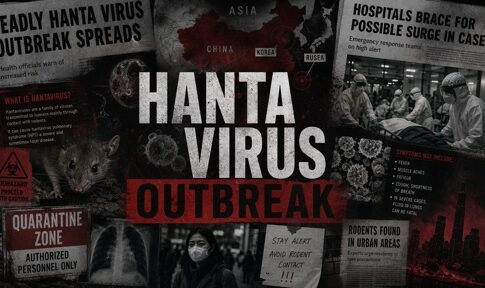
A rare but deadly virus tied to a foreign cruise ship is quietly testing America’s post-COVID preparedness as 41 people are now under federal monitoring.
How a Remote Cruise Turned into a U.S. Hantavirus Test Case
The current scare began far from any American city, aboard the expedition cruise ship MV Hondius, which departed Ushuaia, Argentina, on April 1 with 147 passengers and crew from 23 countries. That ship traced an exotic route through Antarctica and remote South Atlantic islands before several travelers developed severe respiratory illness. By early May, at least eight infections and three deaths were tied to Andes hantavirus, a rare but highly lethal pathogen normally linked to rodent exposure in parts of Argentina and Chile.
Once lab results confirmed hantavirus, international alarms went off. The World Health Organization was notified on May 2 and confirmed Andes virus as the culprit on May 6. The U.S. Centers for Disease Control and Prevention quickly dispatched a team to meet the ship in the Canary Islands, where American passengers were evaluated. The U.S. government coordinated medical repatriation, bringing exposed Americans to Nebraska’s specialized quarantine and biocontainment facilities for close observation.
What “41 Under Monitoring” Really Means for American Families
CDC officials now say at least 41 people within the United States are being monitored for possible infection after cruise-related exposure or subsequent travel contact. Most are in Nebraska, with others followed in multiple states, including patients observed at Emory University and several contacts in Kansas. Federal and state health teams are using a 42-day monitoring window, reflecting the upper bound of the virus’s incubation period, to make sure potential cases are caught quickly before they can trigger local spread.
Health leaders repeatedly stress that the risk to the general public is low to extremely low, primarily because person-to-person transmission of hantavirus is rare, even for Andes virus. Historically, most infections arise from breathing dust contaminated by rodent droppings, not casual contact. For conservatives wary of sweeping lockdowns, this situation looks very different from 2020: the response is limited to clearly exposed individuals, supported by about 100 specialized CDC personnel, rather than broad mandates that disrupt daily life for millions of law-abiding citizens.
Andes Hantavirus: Deadly, Rare, and Closely Watched
Andes virus belongs to the hantavirus family, which has caused 890 laboratory-confirmed cases of hantavirus disease in the United States since 1993, most from domestic rodent exposure. In the Americas, these infections often progress to hantavirus pulmonary syndrome, a severe illness with respiratory failure and an approximate fatality rate of nearly forty percent. Unlike other strains, Andes virus has documented person-to-person spread in South America, usually in close, prolonged contact settings such as households, intimate partners, or specific healthcare encounters.
That history explains why health authorities are taking no chances with cruise-linked exposures, despite the small numbers. The Nebraska biocontainment center, which previously handled Ebola and COVID patients, now hosts many of the exposed Americans under voluntary but strongly encouraged quarantine. Officials have reported that two individuals monitored at Emory University already tested negative and remain asymptomatic. A separate suspected case in Illinois appears tied to rodent droppings at home, underscoring that domestic rodent control, not global panic, should remain a primary focus.
Post-COVID Preparedness Without Nationwide Panic or Power Grabs
For a conservative audience that remembers mask mandates, shuttered churches, and heavy-handed bureaucrats, this outbreak is a real-world test of whether the federal health establishment has learned anything. So far, the response has focused on targeted monitoring, transparent risk communication, and coordinated state partnerships rather than sweeping restrictions. CDC and state agencies emphasize early detection and common-sense precautions for clinicians, while acknowledging that imported cases can occur in a global travel era but are unlikely to spark broad community transmission.
41 People In US Under Monitoring For Hantavirus: CDC https://t.co/7xBd2QAt2m
— zerohedge (@zerohedge) May 15, 2026
Americans who value limited government can take some cautious encouragement from this approach. The Trump administration’s task is to keep pressure on health bureaucracies to stick with narrow, evidence-based interventions instead of drifting back toward one-size-fits-all controls. That means maintaining strong border health screening, supporting high-skill quarantine centers like Nebraska’s, and resisting calls for expansive emergency powers unless the facts genuinely warrant them. This outbreak is serious but contained, and so far it is being handled in a way that respects both safety and freedom.
Sources:
CDC: Risk to general public from hantavirus is low
2026 Multi-country Hantavirus Cluster Linked to Cruise Ship
Officials tracking 41 Americans after deadly hantavirus outbreak
41 people monitored for hantavirus in US, CDC reports
Look up what Hanta means in Hebrew. Wake up it’s another lie just like with Covid. If you haven’t learned from the 1st PLANDEMIC I feel sorry for you. They want you scared to run out and get some more of Big Pharma’s poison. Don’t fall for it.